

Doom Loop
Eleven years of this. The names change. The venues change. The script does not.

A Secret Service officer is alive this morning because his vest stopped a round Saturday night at the Washington Hilton. The round came from one of two firearms a 31-year-old from Torrance, California bought legally — one in 2023, the other in 2025. Nobody flagged him. Nobody called him in. He walked into a gun store, twice, and walked out armed.
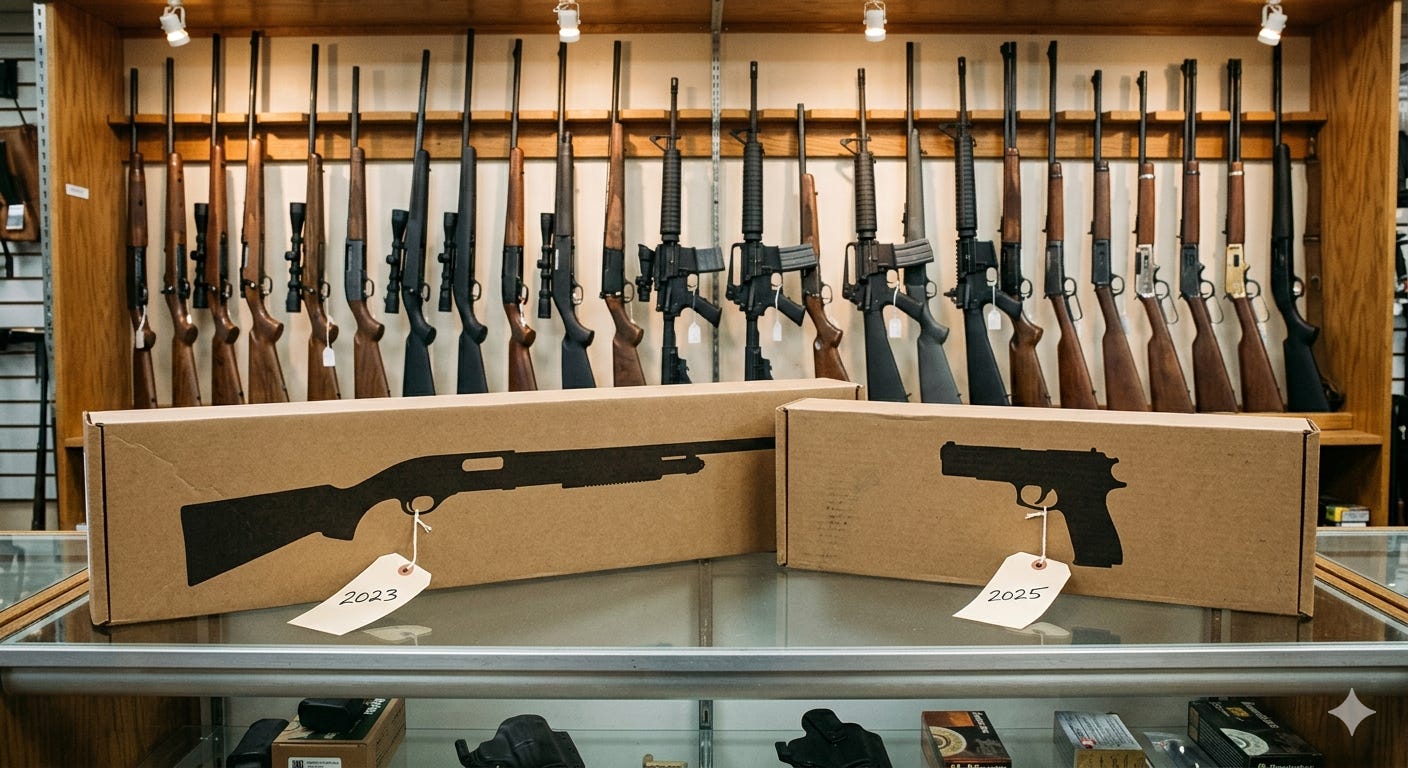
Saturday night he charged a Secret Service checkpoint outside the ballroom with both weapons and a fistful of knives, with the President of the United States and roughly every working journalist in Washington on the other side of the doors.
This is a story about how he got the guns. This is a doom loop. The shooting, the script, the silence that follows, the next shooting.
The “how” is the easiest part of this story to explain, and that is what makes it intolerable. He was thirty-one. No criminal record any reporter has surfaced. No prior contact with the system. No mental health adjudication. Nothing in any database that would have flagged him at the counter. He walked into a federally licensed dealer. He filled out the form. The FBI’s instant-check returned a green light because there was nothing in the system to return anything else. He walked out with a gun. Two years later he did it again, and nothing was different.

That is the federal floor: clean record, walk in, walk out. A handful of states have built friction on top of it — waiting periods, permits, fingerprints, some delay between deciding to own a gun and owning one. The federal government has chosen, again and again, not to. The question of “how” reduces to one sentence. He got the guns the way the law tells him he can.
